
Hatchling Setup
The best start for your little one…
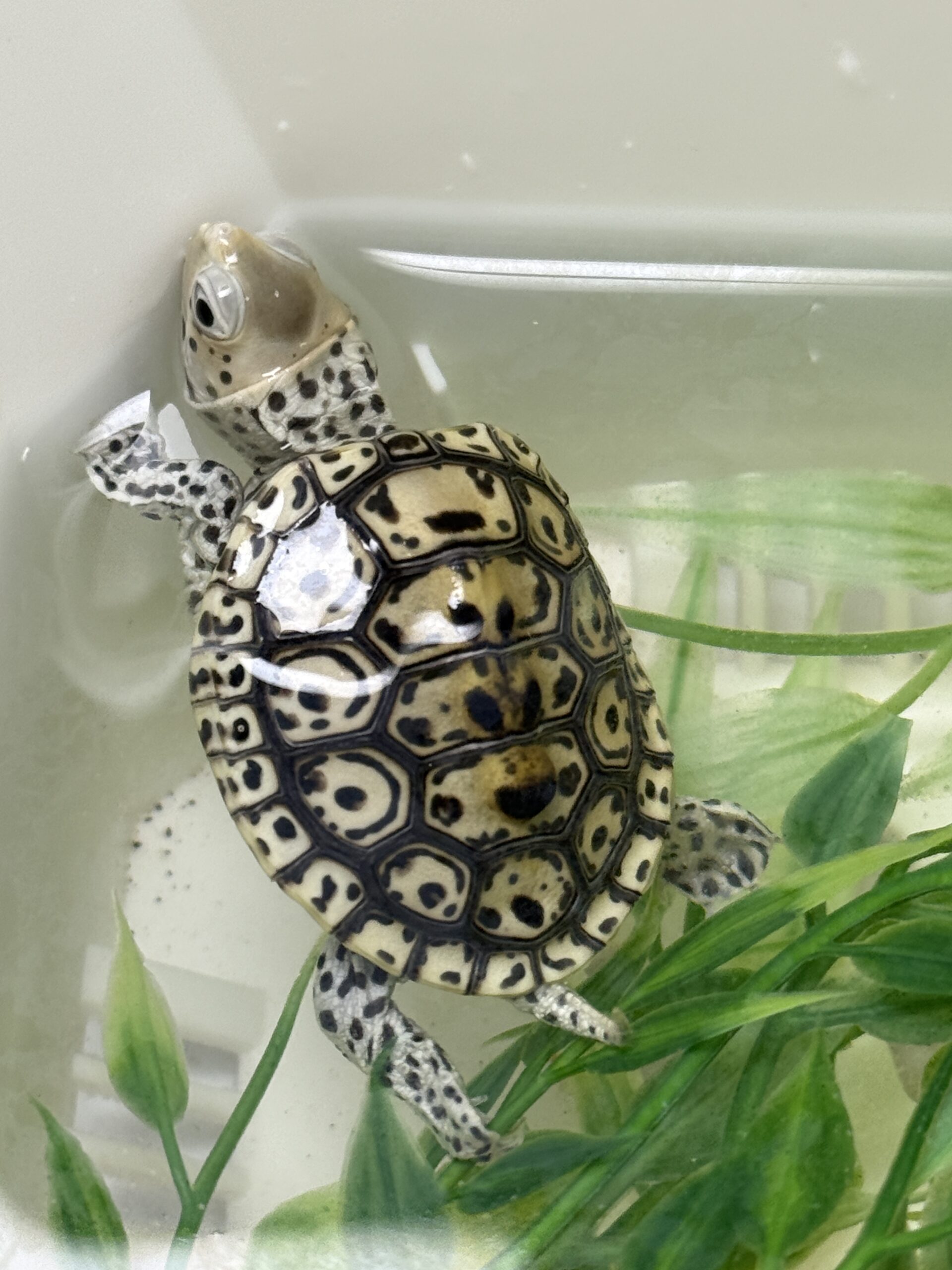
- Shallow clean water is key.
- 1-4 inches deep is ideal.
- Lots of floating plants
- 84 degree water temperature
- No basking spot or heat bulb
- UVB lighting*
- Feed 1-3 times a day.
Hatchlings live on land in the wild, typically under tidal wrack or amongst marsh cordgrass (spartina sp.) along the water’s edge. Because of this, hatchlings in captivity require only a small tank with 1” to 2” of water, a submersible filter and lots of plastic plants for them to shelter under. Small aquariums or small plastic containers work well to house them.
*Some say UVB is not necessary in their first year of life but can be supplied without harm. Others feel it’s necessary for Vitamin D and calcium absorption. 5-6% UVB is adequate at this age.

Heat lamps are not recommended until they reach 3” in carapace (top shell) length due to their tendency to want to aggressively bask. A hatchling terrapin’s carapace (shell) is not fully developed at this stage, and because of this, they are easily dried out which causes unnaturally bumpy shell growth. This phenomenon is called shell pyramiding. This appearance can take many years to smooth out by the shedding of their scutes. And even though the shell will gradually smooth out, it will most likely never fully correct itself.
We feed a variety of pellets, dried shrimp, and other protein rich foods, multiple times a day.
Warm clean water is the most important part of caring for a hatchling. The warm water keeps the baby turtles hungry and thriving. We keep the water temperature between 83-86 degrees. Depending on filtration, water should be changed at least 3 times a week. Because hatchlings are fed so often, they dirty their water quickly.
Now is a good time to teach them to feed in a separate container if you choose to do so. To start, a small container with shallow water can be floated on top of the water in the hatchling setup. Once they’re accustomed to it and eating well, the feeding container can be moved to a side shelf or wherever is convenient.
Terrapins of any age and size require extremely clean water. If this step is dismissed, your terrapin has the chance to become ill, and develop skin and shell fungus. If illness, and fungus are not detected in a timely manner, they can kill the hatchling, very quickly.
It’s not difficult to care for a hatchling if attention is paid to the needs of your new little friend. If these steps are followed, you will have a happy healthy companion for many years to come!